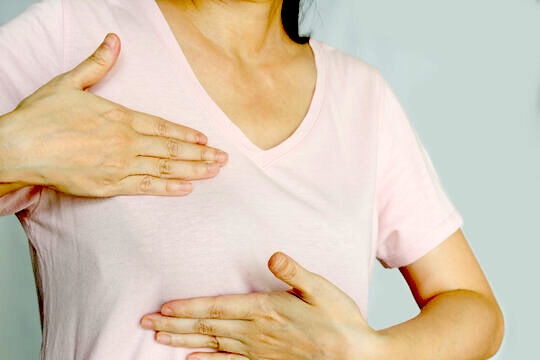

Breast cancer awareness has long been a cornerstone of public health messaging, but today, the conversation is shifting. In Louisiana, particularly in Baton Rouge, the focus is moving beyond awareness and toward early detection powered by cutting-edge imaging and diagnostic technology. This evolution is saving lives by identifying cancer earlier, improving accuracy, and enabling more personalized treatment plans.
Why Early Detection Matters More Than Ever
Breast cancer remains one of the most common cancers affecting women, with about one in eight women diagnosed in their lifetime. In Louisiana, according to LSU Health New Orleans’ Louisiana Tumor Registry, “breast cancer is the second most diagnosed cancer in the state and the most frequently diagnosed cancer among women.” According to the Louisiana Cancer Research Center (LCRC), “While our statewide diagnosis rate is similar to the national average, Louisiana women are dying of breast cancer at a rate 14% higher than the national average.”
However, outcomes have dramatically improved in recent decades, largely because of earlier detection. When breast cancer is found at a localized stage, the five-year survival rate is approximately 99%.
This is why access to advanced screening tools is so critical. Detecting cancer before it spreads not only increases survival but also often allows for less aggressive treatments and a better quality of life.
The Evolution of Breast Imaging Technology
3D Mammography (Digital Breast Tomosynthesis)
One of the most impactful advancements in breast cancer detection is 3D mammography, now widely available in Baton Rouge imaging centers.
LaKeisha Williams, Pharm.D., R.Ph., Clinical Associate Professor, Division of Clinical and Administrative Sciences at Xavier University of Louisiana, an LCRC member institution, explains that “2D mammograms may not necessarily see tumors women may have. 3D mammograms allow us to see breast tissue better and show different angles of what may be hidden.”
Unlike traditional 2D mammograms, 3D mammography captures multiple images of the breast from different angles, creating a layered, more detailed view. This technology:
- Improves detection of small tumors
- Reduces false positives and unnecessary callbacks
- Enhances visibility in dense breast tissue
Local providers, such as imaging centers in Baton Rouge, have adopted this technology as a new standard of care, helping physicians detect abnormalities earlier and with greater confidence.
Breast MRI: High-Sensitivity Imaging for High-Risk Patients
For patients with a higher risk of breast cancer — such as those with genetic predispositions or dense breast tissue — breast MRI offers another layer of precision.
MRI uses magnetic fields rather than radiation to produce highly detailed images, making it especially effective for:
- Detecting small or hidden tumors
- Evaluating dense breast tissue
- Determining the extent of a known cancer
In Louisiana, insurance laws increasingly support access to supplemental imaging like MRI for high-risk individuals, ensuring more patients can benefit from advanced diagnostics.
Contrast-Enhanced Mammography (CEM)
An emerging innovation, contrast-enhanced mammography combines traditional imaging with a contrast dye to highlight abnormal tissue. This technique:
- Improves visibility of tumors not seen on standard mammograms
- Offers detection rates similar to MRI
- Provides a faster, more accessible alternative for some patients
CEM is particularly promising for patients who cannot undergo an MRI or need additional diagnostic clarity.
Molecular Breast Imaging and Functional Techniques
Beyond structural imaging, newer technologies like molecular breast imaging (MBI) and positron emission mammography (PEM) focus on cellular activity rather than just anatomy.
These tools can:
- Detect cancer based on metabolic activity
- Identify tumors in dense breast tissue
- Provide additional insight when other imaging is inconclusive
While not yet routine for all patients, these innovations are expanding diagnostic possibilities.
Artificial Intelligence in Breast Cancer Detection
Artificial intelligence (AI) is rapidly transforming how radiologists interpret imaging.
AI-assisted tools can:
- Analyze large volumes of imaging data quickly
- Identify subtle patterns that may be missed by the human eye
- Improve diagnostic accuracy and consistency
In some cases, AI is even being used to assess a patient’s future breast cancer risk, opening the door to proactive, personalized screening strategies.
Expanding Access to Advanced Screening in Baton Rouge
Healthcare providers in Baton Rouge are investing heavily in advanced imaging systems, improving both access and outcomes for local patients.
Facilities like dedicated women’s imaging centers offer:
- On-site 3D mammography and ultrasound
- Integrated diagnostic workflows for faster results
- Advanced imaging displays that allow radiologists to review multiple scan types simultaneously for more accurate diagnoses
This local availability matters. When screenings are convenient and accessible, patients are more likely to stay on schedule, leading to earlier detection and better outcomes.
Personalized Screening: A New Standard of Care
Modern breast cancer detection is no longer one-size-fits-all. Today’s approach considers:
- Age and family history
- Breast density
- Genetic risk factors
- Prior imaging results
Louisiana guidelines now emphasize annual mammography starting at age 40, with earlier and supplemental screening for high-risk patients. This personalized strategy ensures that each patient receives the right combination of tools for their unique risk profile.
Technology Is Transforming Outcomes
The future of breast cancer care in Louisiana is not just about awareness — it’s about precision, access, and early action. With advancements like 3D mammography, MRI, AI-assisted analysis, and emerging imaging technologies, Baton Rouge patients now benefit from earlier and more accurate detection, fewer unnecessary procedures, and more targeted, less invasive treatments.
As technology continues to evolve, one thing is clear: Early detection saves lives. In Louisiana, it’s becoming more advanced and accessible than ever before.
Frequently Asked Questions (FAQ) About Early Detection and Diagnosis of Breast Cancer in Louisiana
When should I start getting screened for breast cancer?
Most guidelines recommend that women begin annual mammograms at age 40. However, if you have a family history of breast cancer, dense breast tissue, or genetic risk factors, your doctor may recommend starting earlier or adding supplemental screening like an MRI.
What is the difference between 2D and 3D mammography?
Traditional 2D mammography captures flat images of the breast, while 3D mammography (digital breast tomosynthesis) takes multiple images from different angles to create a layered view. This makes it easier to detect small tumors and reduces the likelihood of false positives.
Is 3D mammography more effective than standard mammograms?
Yes, 3D mammography has been shown to improve cancer detection rates, especially in women with dense breast tissue. It also reduces the need for follow-up imaging by providing clearer, more detailed results.
Who should consider a breast MRI?
Breast MRI is typically recommended for women at higher risk of breast cancer, including those with genetic mutations (like BRCA1 or BRCA2), a strong family history, or very dense breast tissue. Your doctor can help determine if an MRI is appropriate for you.
What is contrast-enhanced mammography (CEM)?
CEM is an advanced imaging technique that uses a contrast dye to highlight abnormal areas in breast tissue. It can detect tumors that may not appear on standard mammograms and is often used when additional clarity is needed.
Are newer imaging technologies like MBI and PEM widely available?
Molecular breast imaging (MBI) and positron emission mammography (PEM) are emerging technologies that are not yet standard for all patients. They are typically used in specialized cases, particularly when other imaging results are inconclusive.
How is artificial intelligence (AI) used in breast cancer detection?
AI is used to assist radiologists by analyzing imaging data and identifying subtle abnormalities that may be difficult to detect. It helps improve accuracy, reduce human error, and may even help predict future cancer risk.
Does insurance in Louisiana cover advanced breast imaging?
Louisiana law increasingly supports coverage for supplemental imaging (such as MRI) for high-risk patients. Coverage can vary by provider and plan, so it’s important to check with your insurance company and healthcare provider.
What does “dense breast tissue” mean, and why does it matter?
Dense breast tissue contains more fibrous and glandular tissue than fatty tissue, which can make it harder to detect cancer on standard mammograms. Women with dense breasts may benefit from additional imaging like 3D mammography or an MRI.
How can I reduce my risk of breast cancer?
While not all risk factors are preventable, you can lower your risk by maintaining a healthy weight, staying physically active, limiting alcohol consumption, and keeping up with regular screenings. Early detection remains one of the most powerful tools for improving outcomes.
How often should I get screened if I’m at high risk?
High-risk individuals may need more frequent screenings, such as annual mammograms combined with an MRI. Your healthcare provider will create a personalized screening plan based on your risk profile.
Where can I access advanced breast imaging in Baton Rouge?
Many women’s imaging centers and healthcare providers in Baton Rouge now offer advanced technologies like 3D mammography, ultrasound, and MRI. Choosing a facility with integrated imaging services can help ensure faster, more accurate results.
How to Contact Us
Have questions or ready to take the next step in your breast cancer care or reconstruction journey?
Contact ReCenter today to connect with our expert team of board-certified breast surgeons and breast reconstruction specialists. Located in Baton Rouge, Louisiana, we provide compassionate, personalized care using the most advanced surgical techniques. Call us, send a message, or schedule a consultation to learn how we can support you every step of the way.